Speculum Mentis

Details

  • Availability:
  • Date: 2026
  • Dimensions (W x H): 80 x 60 cm
  • Medium: Oil on linen canvas
  • Theme: Surrealism, symbolism, baroque
  • Price: 3000€

Speculum Mentis

Series: Regnum Silentii

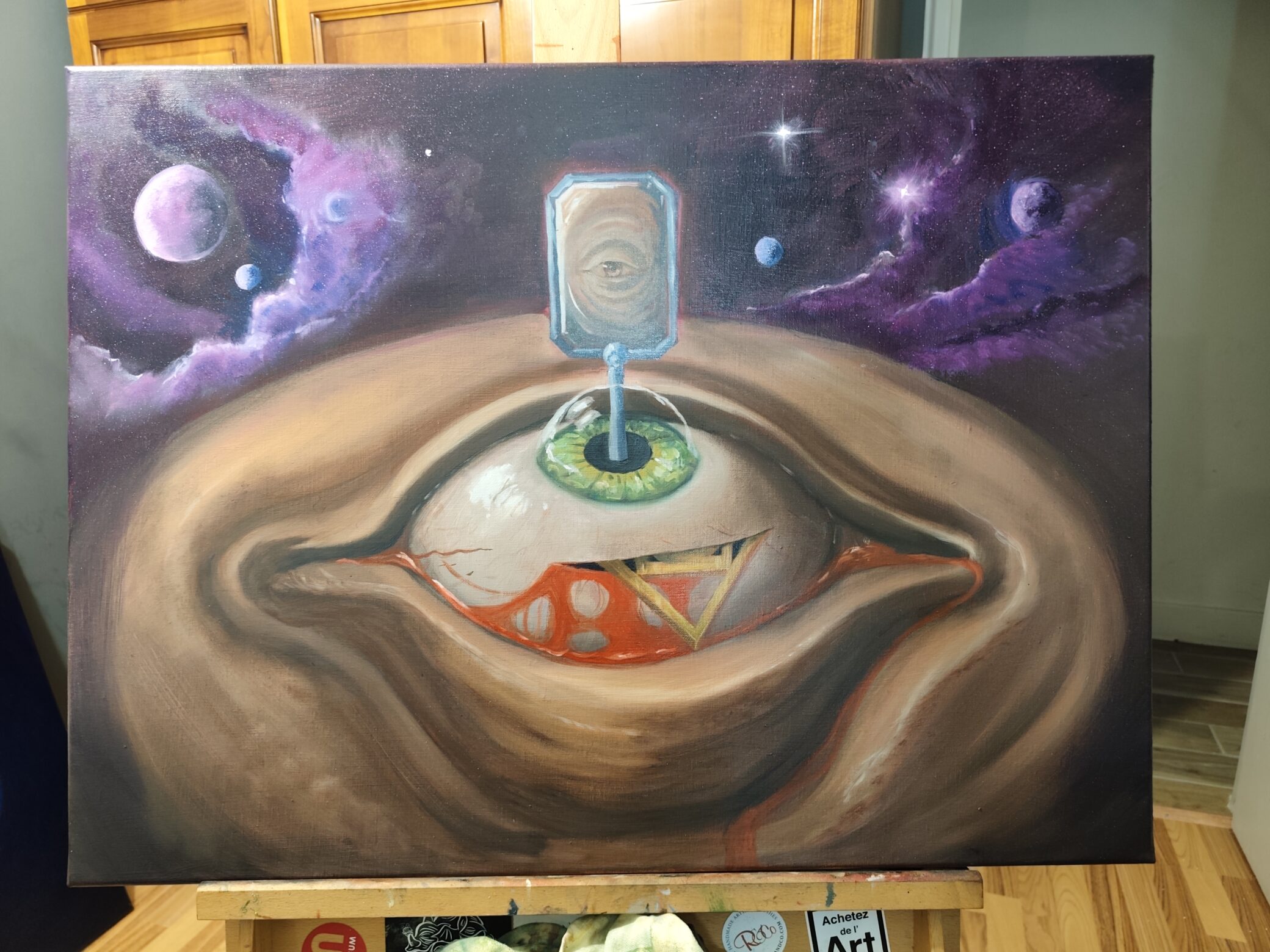
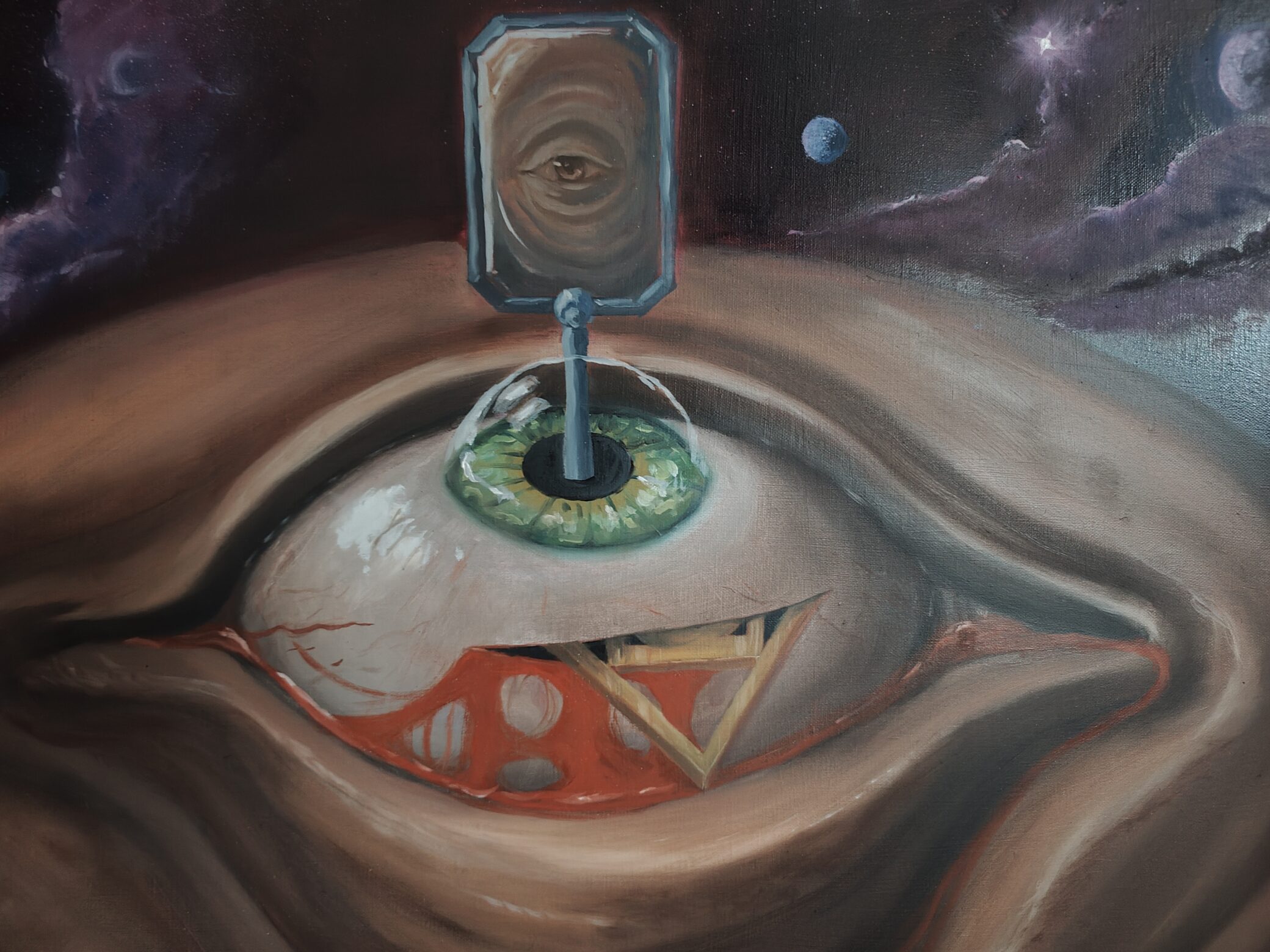
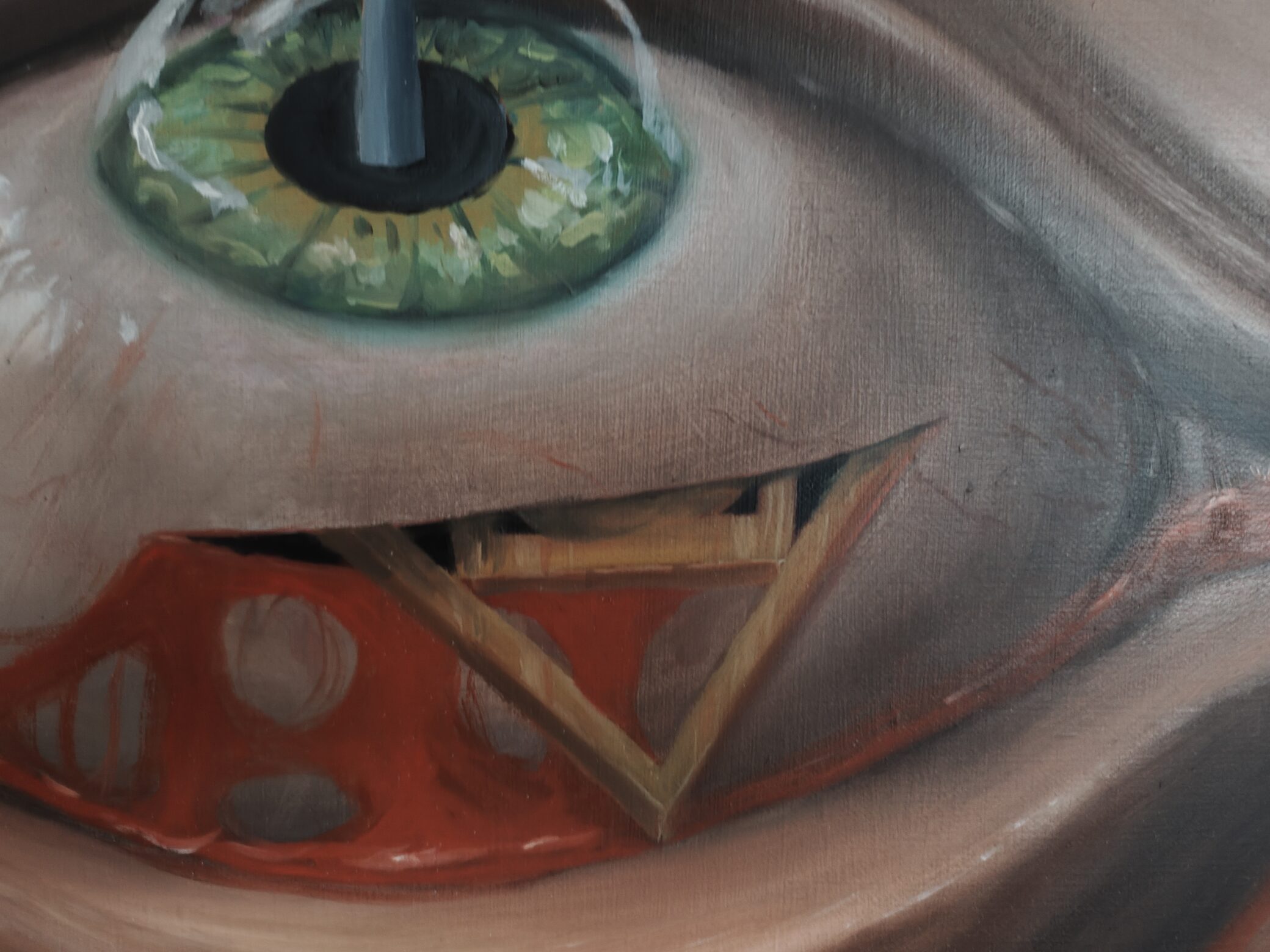
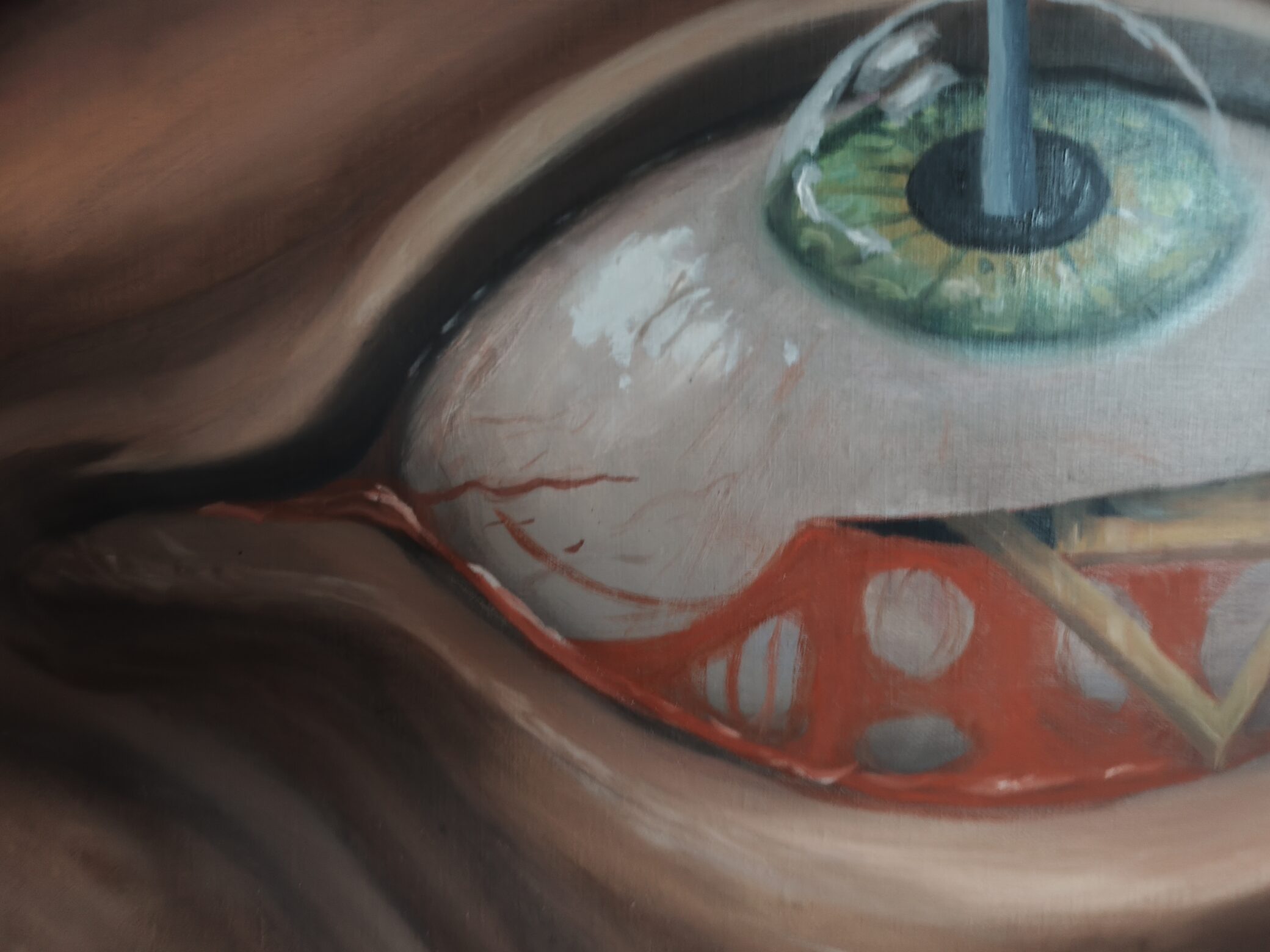
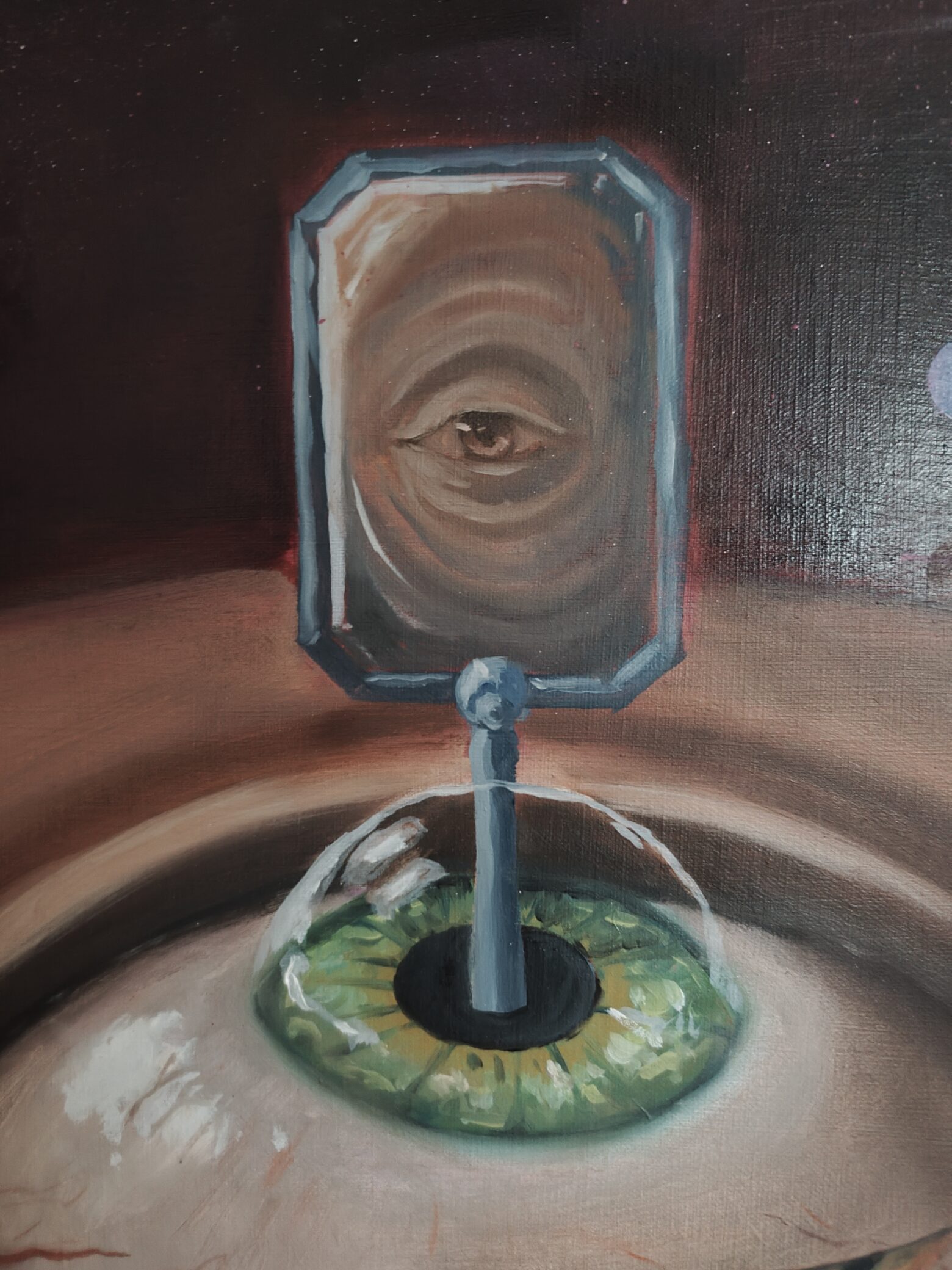
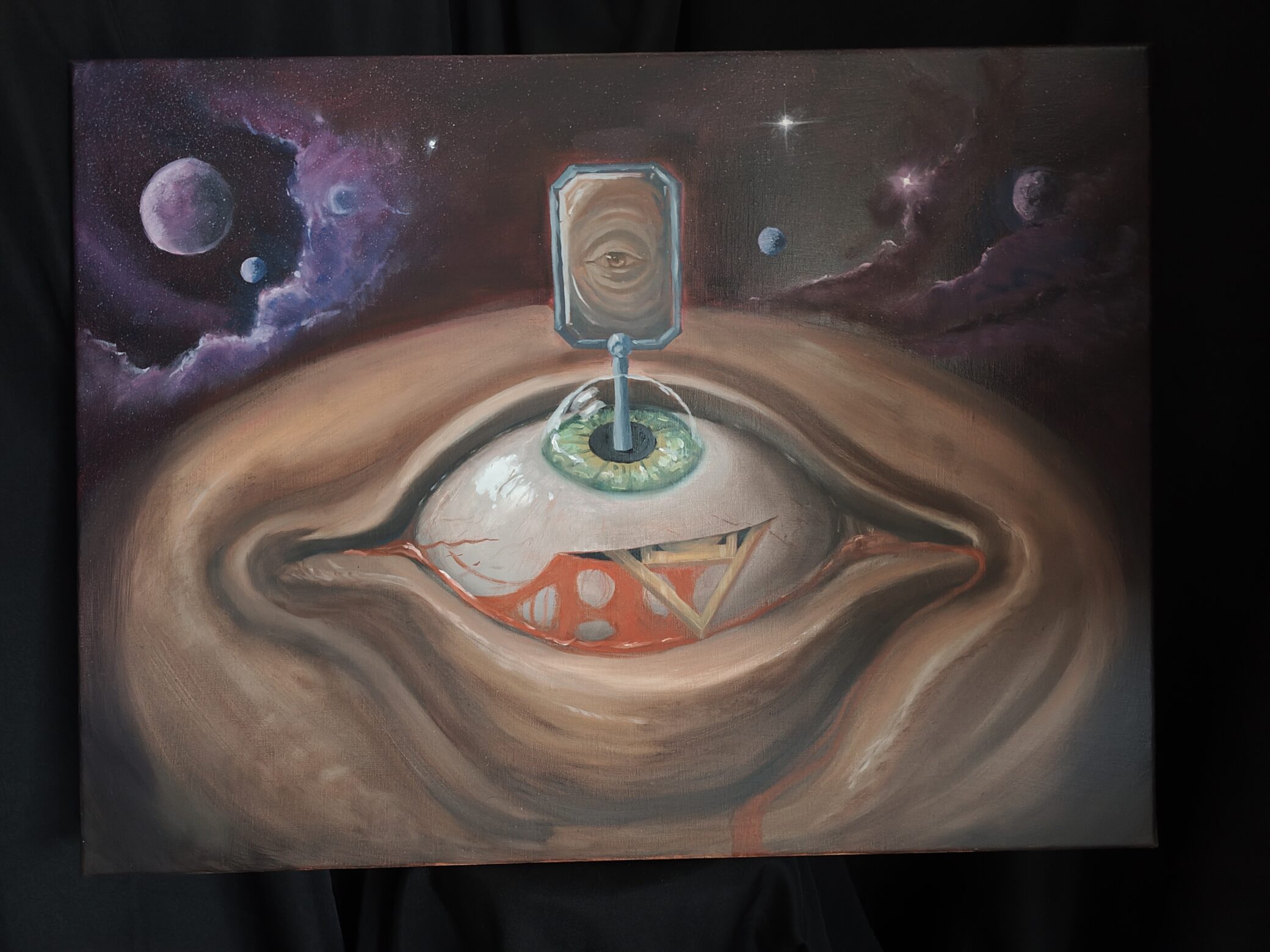
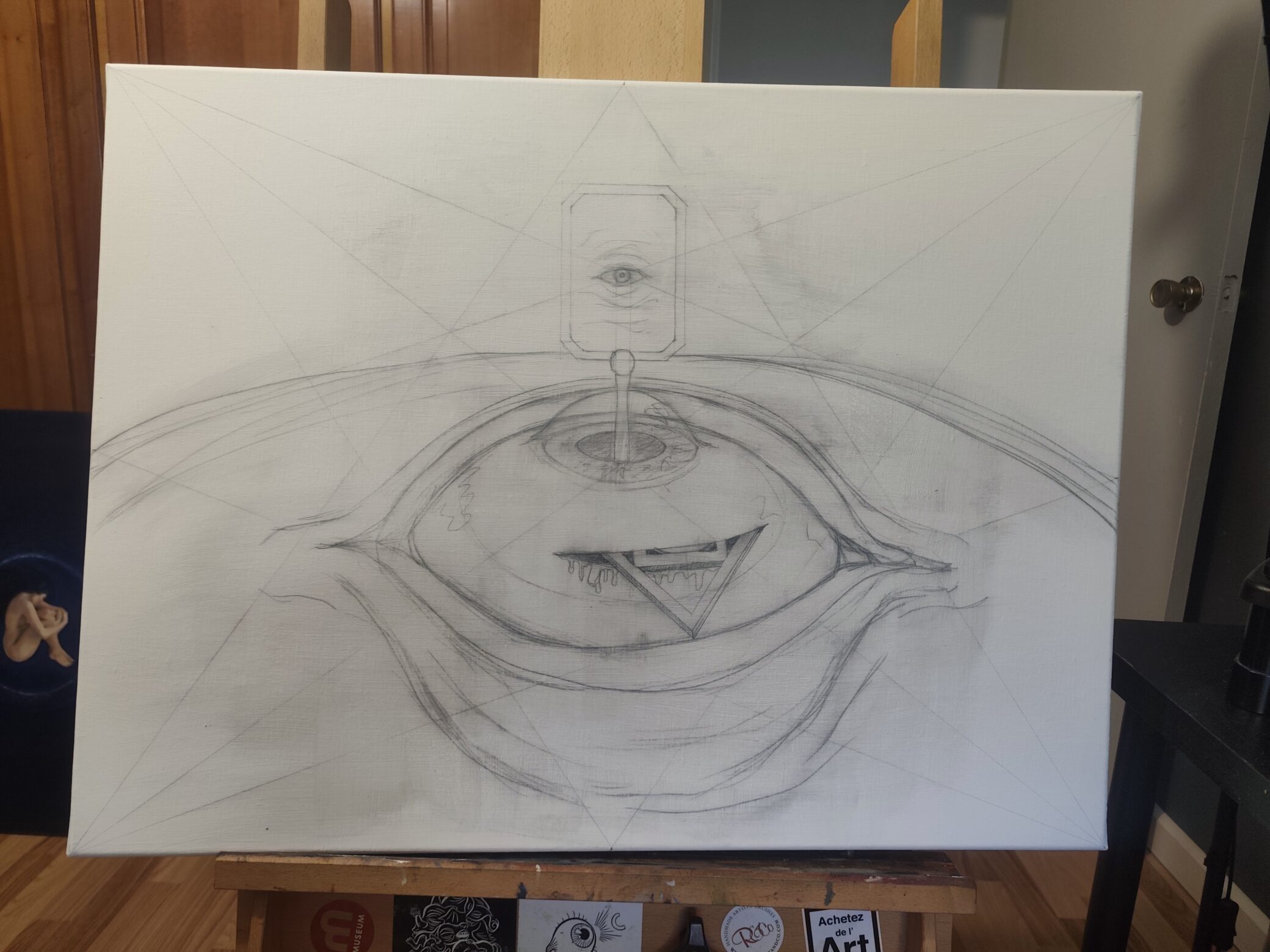
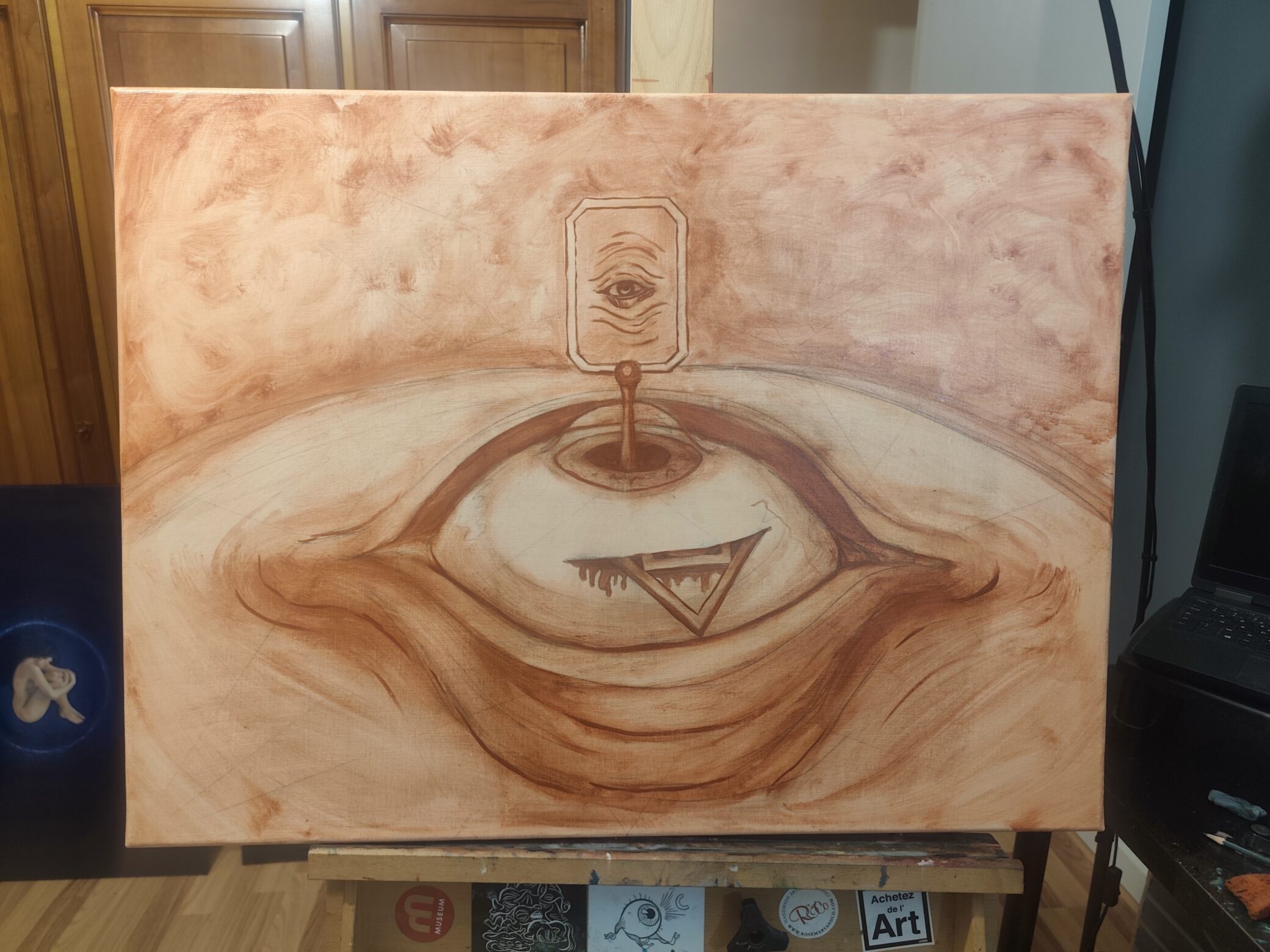
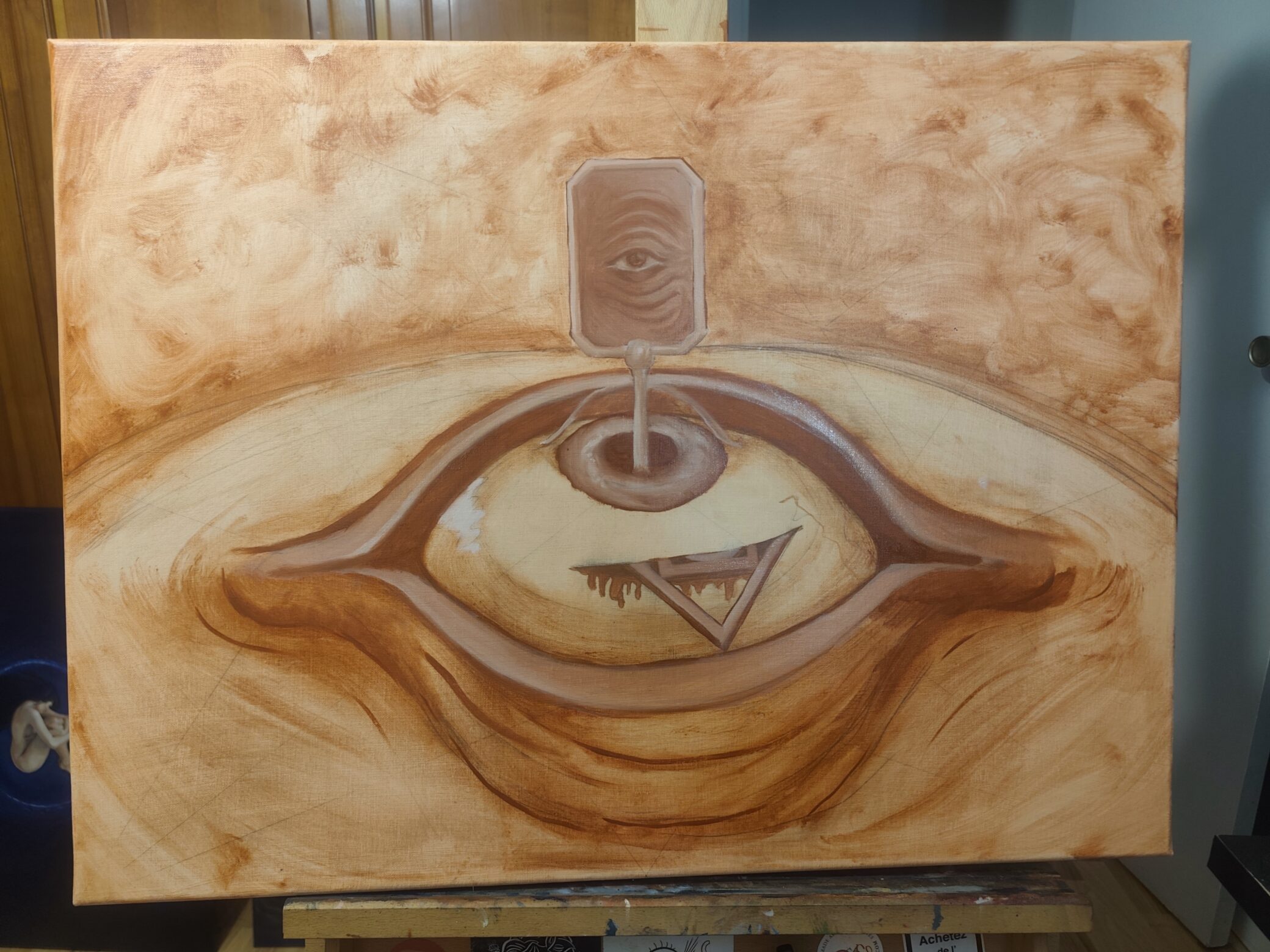
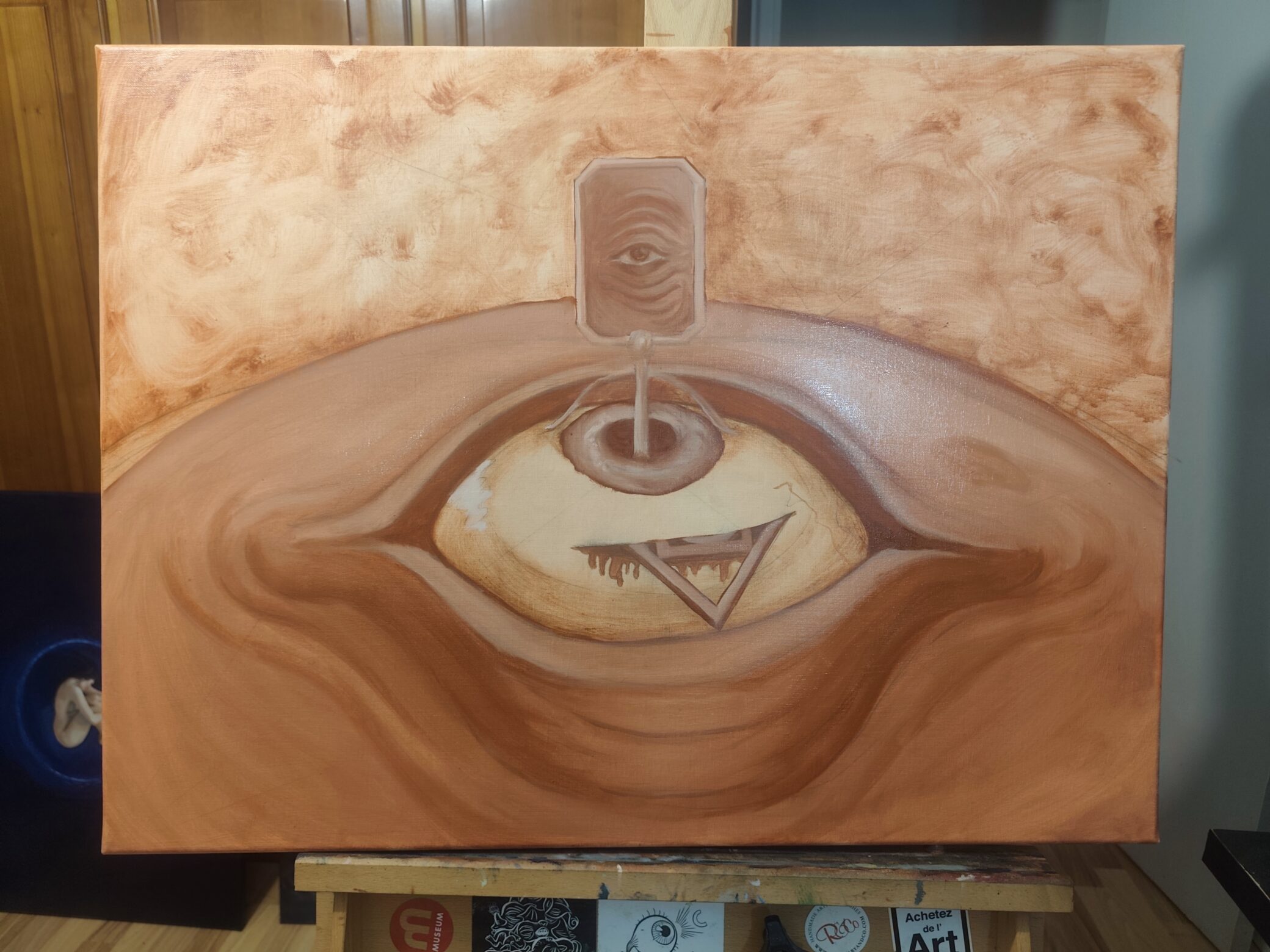
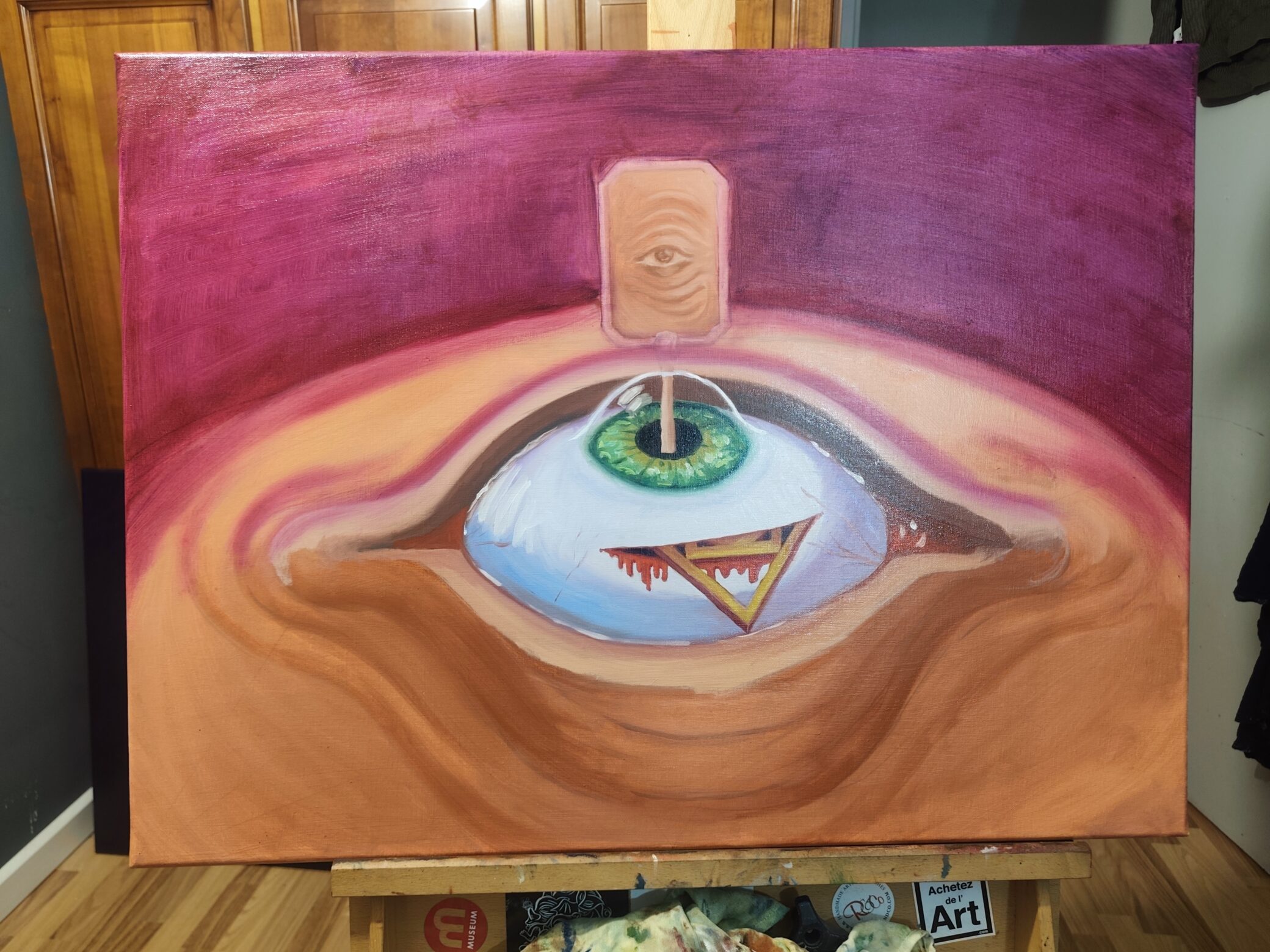
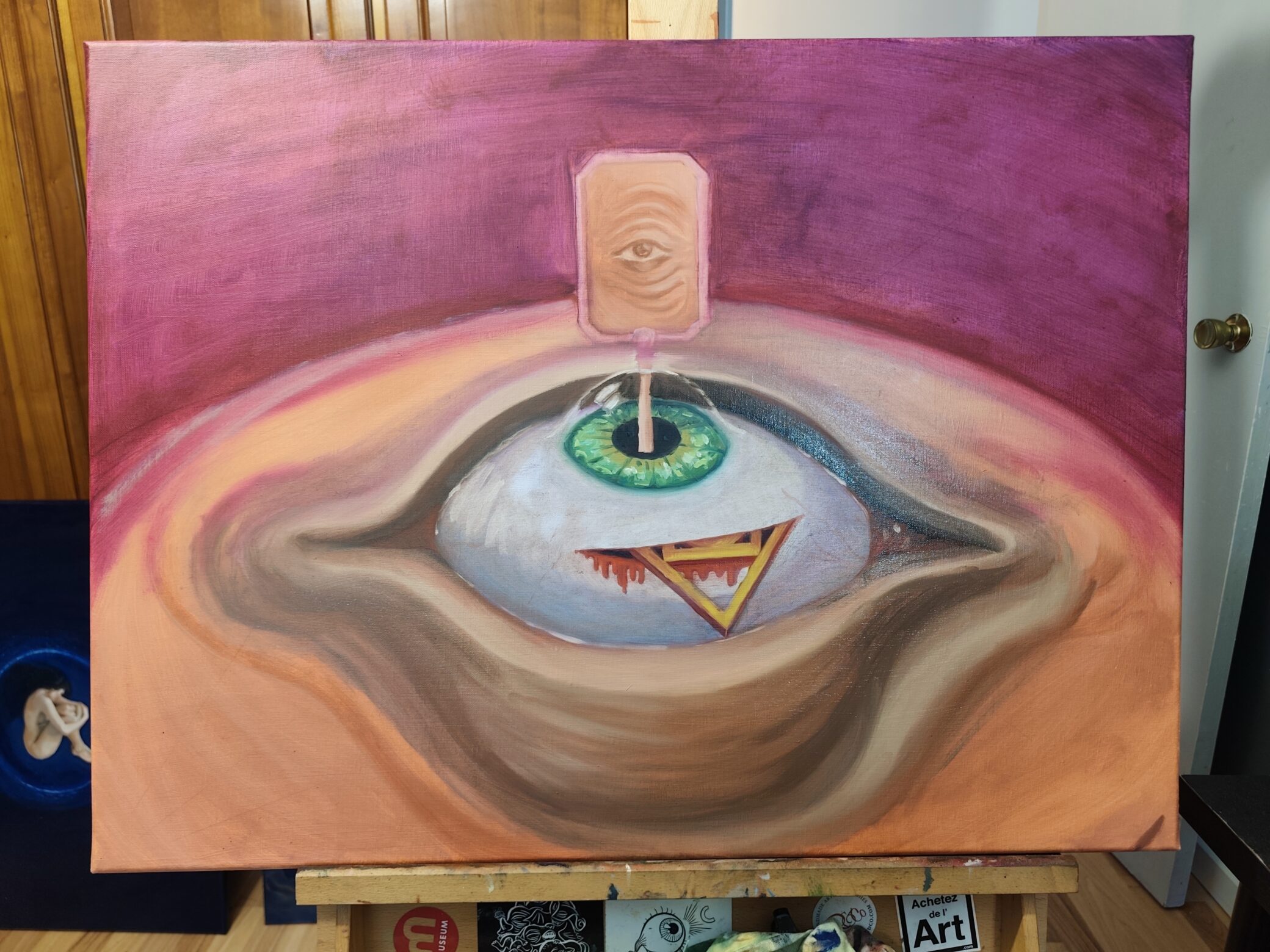
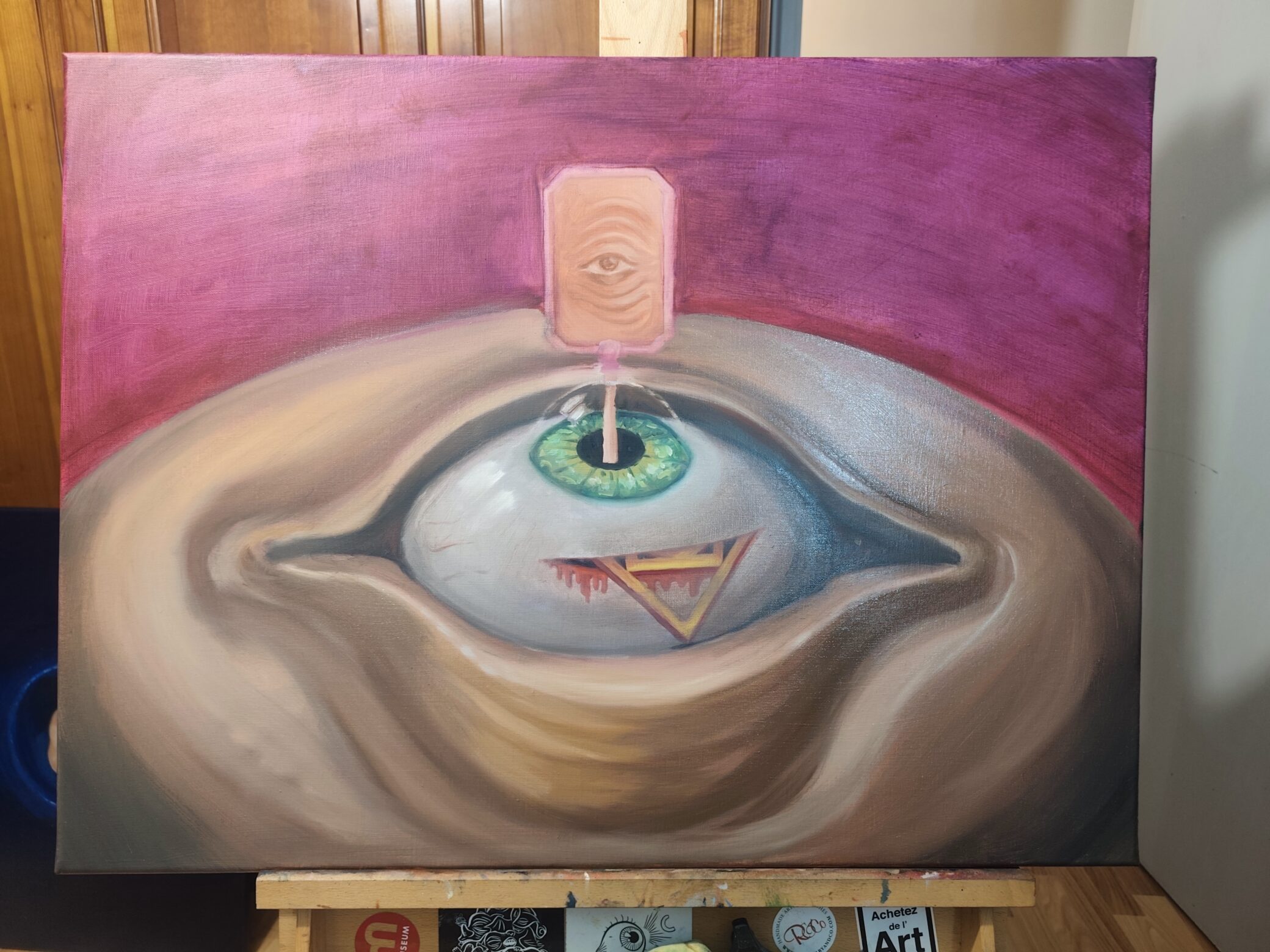
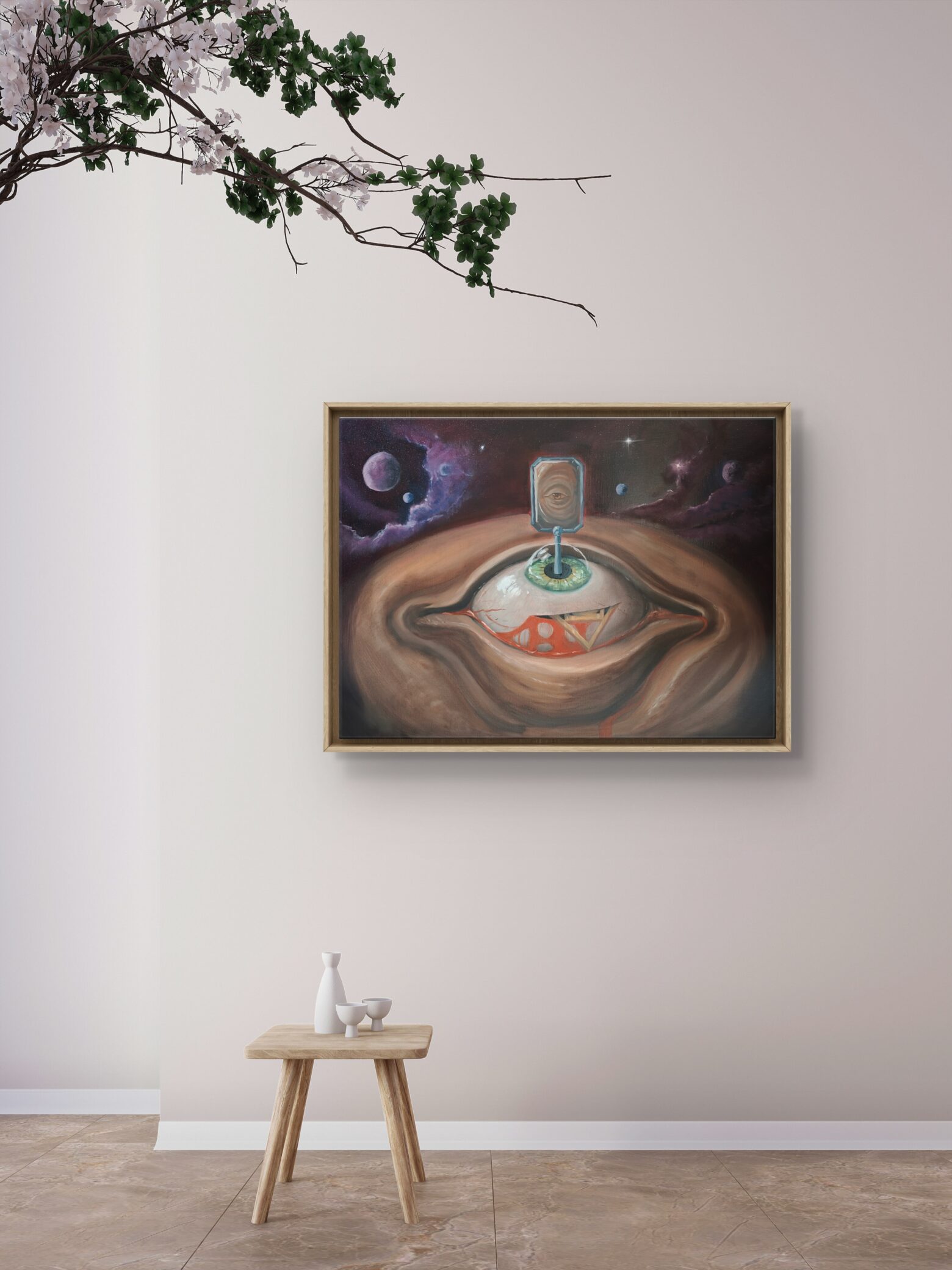
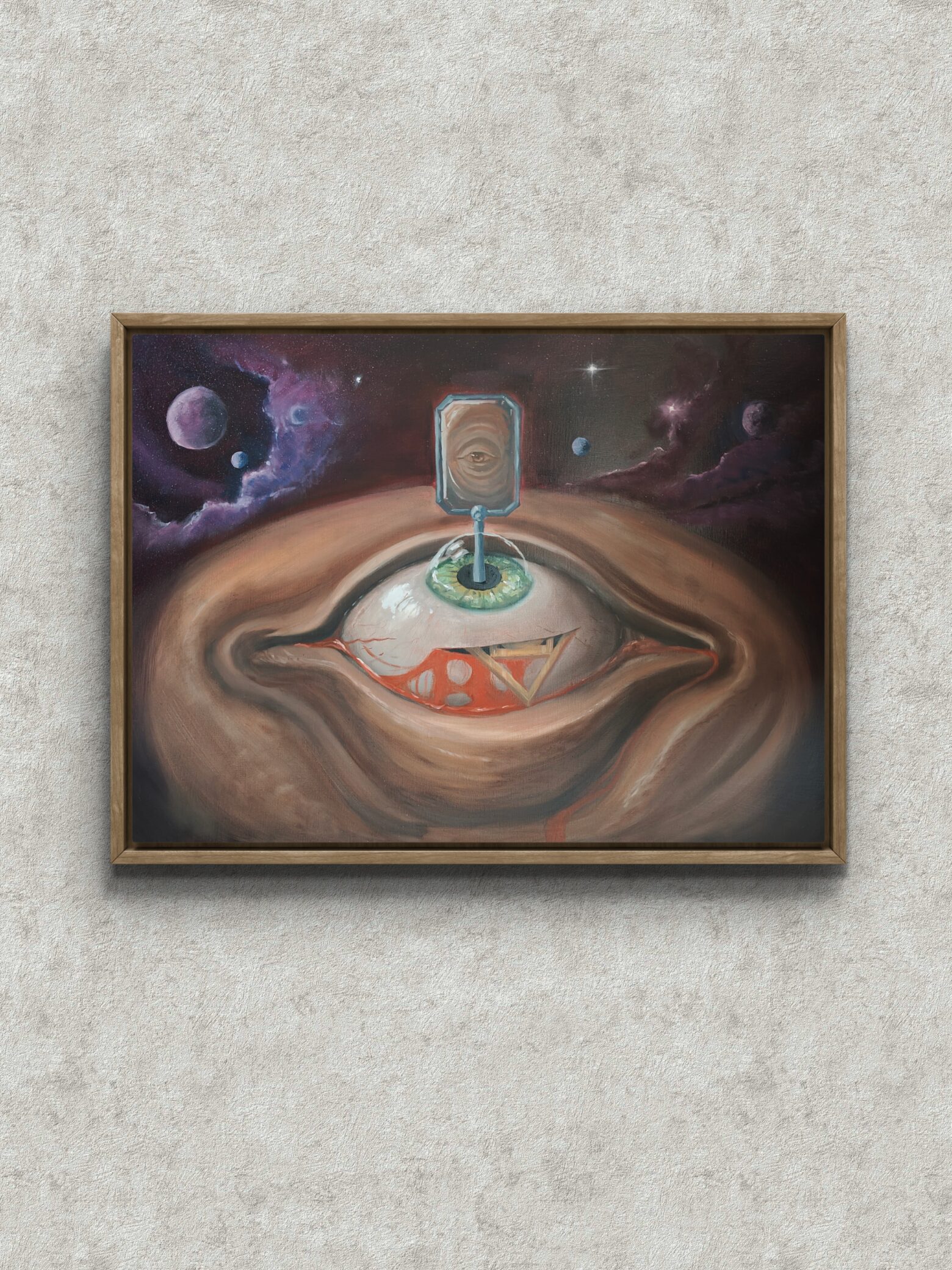
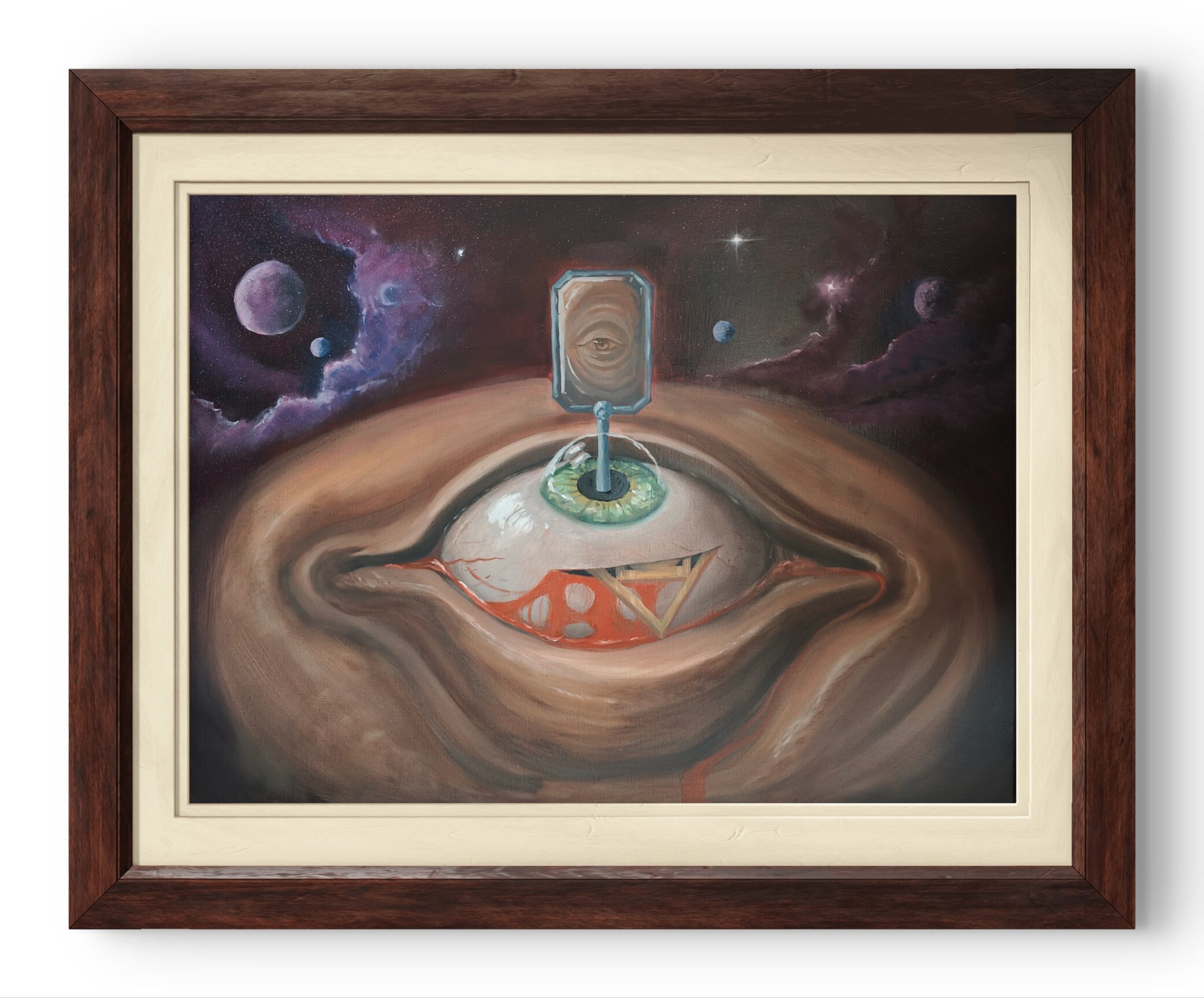
In Speculum Mentis, Christophe Correia interrogates the nature of the gaze as a threshold between the tangible world and the invisible territories of consciousness. Emerging from an indeterminate organic form, the eye appears less as an organ of perception than as a presence suspended between matter, memory, and cosmic immensity.

At the heart of the composition, a vertical structure recalling a mirror, a reliquary, and a portal simultaneously reveals a second gaze. This visual mise en abyme explores the mechanisms of introspection and reflective consciousness: seeing becomes an experience of self-return, in which the observer discovers himself through the very act of observation.

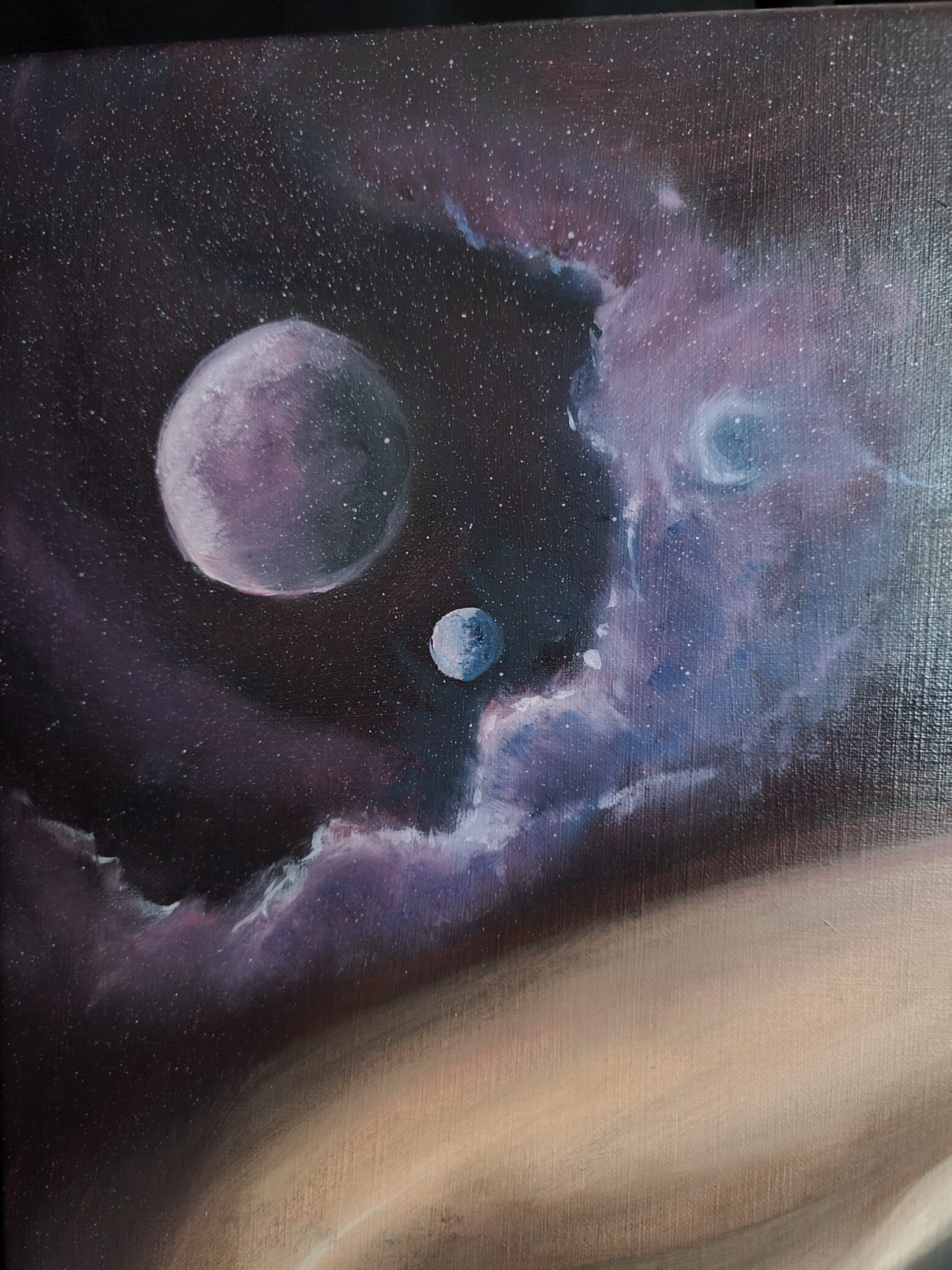
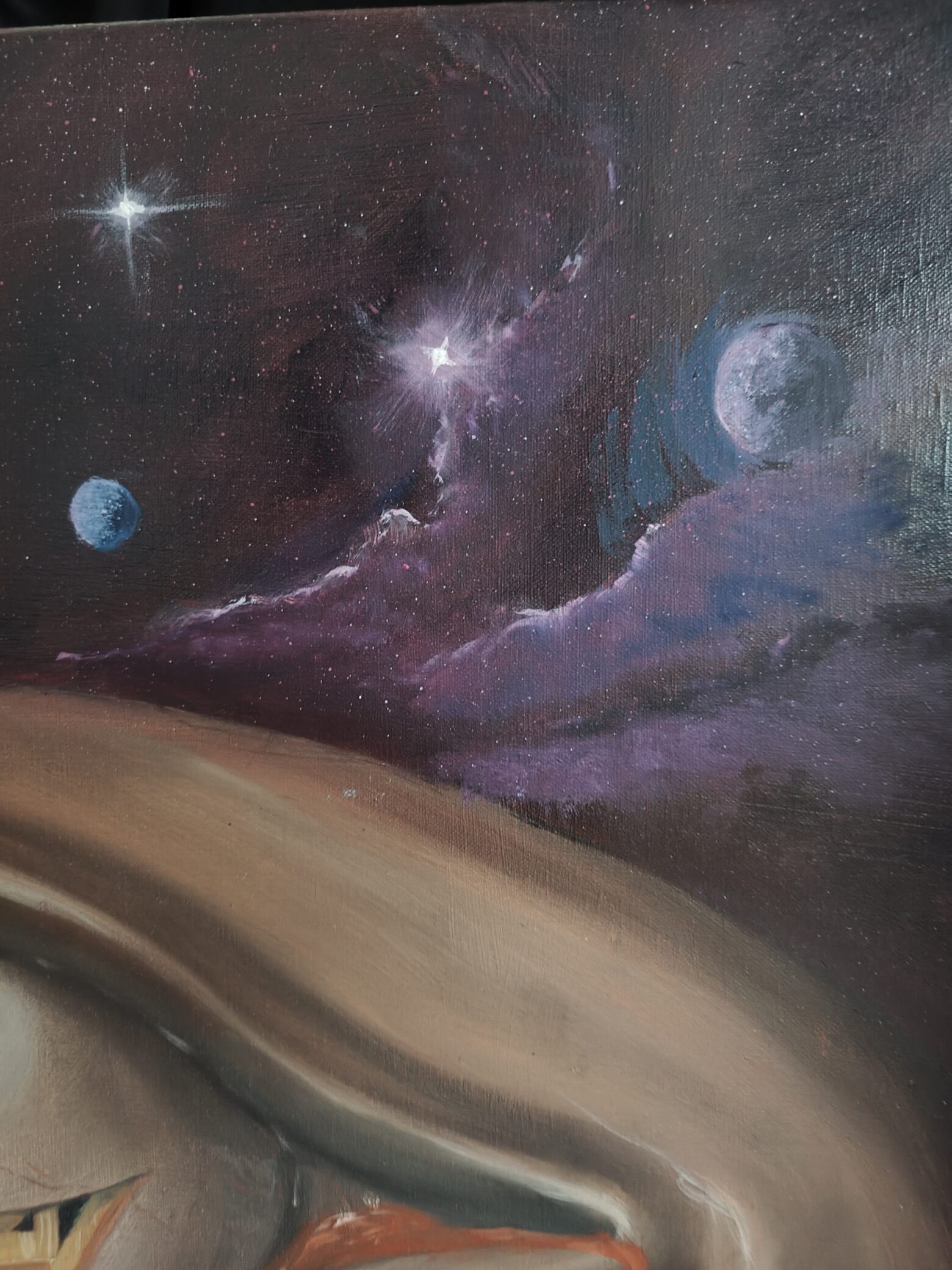
Around this symbolic architecture, the astral space unfolds through constellations of planets, nebulous formations, and profound darkness. The work weaves a dialogue between the infinitely vast and the intimate realm of the psyche, transforming the cosmos from a setting into a metaphor for an inner landscape. Each element appears to participate in a silent cartography of thought, memory, and lived experience.

Rooted in the symbolic universe of Regnum Silentii, the painting deploys a reflection on silence as a territory of knowledge and revelation. It convenes a contemplative space where the boundaries between inner reality and cosmic reality gradually dissolve, while the gaze becomes at once witness, threshold, and mirror of existence.
Frequently Asked Questions:

What does the title Speculum Mentis mean?

Speculum Mentis, which can be translated as "Mirror of the Mind", evokes the consciousness contemplating itself. The artwork questions our ability to observe our own thoughts and explore the depths of our inner world. The mirror thus becomes a metaphor for introspection and self-knowledge.

What does the eye at the centre of the composition represent?

The eye represents a presence that goes beyond its physical function of perception. It evokes the Observer, the silent witness seemingly standing behind conscious thought. It symbolises the ability of consciousness to step back from itself and observe its own movements.

Why does the eye emerge from an undefined organic form?

The organic form creates an ambiguity between the living, matter and the immaterial. It suggests a presence in the process of becoming, suspended between physical reality and inner experience. The eye seems to emerge from this matter as a manifestation of consciousness, without its origin ever being clearly defined.

What is the significance of the mirror and the mise en abyme in this painting?

The vertical structure, evoking a mirror, a reliquary or a portal, introduces a second gaze into the composition. This repetition creates a mise en abyme that questions the paradox of reflexive consciousness: when we observe something, who observes the one who is looking? The mirror becomes a symbolic space in which the observer discovers themselves through the very act of observing.

Why associate human consciousness with the vastness of the cosmos?

The cosmos is a powerful metaphor for the human mind because both remain largely unknown and seem to contain infinite depths. In Speculum Mentis, planets, nebulae and dark spaces are not merely decorative elements. They represent the immensity of our inner landscape and the unexplored territories of consciousness.

What is the connection between Speculum Mentis and introspection?

The artwork explores introspection as an experience of turning inward. It suggests that self-knowledge does not rely solely on observing our thoughts, but also on our ability to observe the one who thinks. This process opens up questions about identity, perception and the very nature of consciousness.

What role does silence play in Speculum Mentis?

Part of the Regnum Silentii series, this painting approaches silence as a territory of knowledge and revelation. Inner stillness allows us to suspend habitual patterns of thought and become attentive to the subtle movements of consciousness. Silence thus becomes a condition that enables introspection and contemplation.

How should we interpret the relationship between inner reality and cosmic reality?

The painting establishes a dialogue between the infinitely vast and the intimacy of the psyche. It suggests that the inner world and the universe may not be as separate as we tend to believe. The cosmos becomes a metaphorical mirror of our own inner immensity, while consciousness becomes a space where these two dimensions seem to meet.

What is the relationship between Speculum Mentis and the Regnum Silentii series?

Speculum Mentis is part of the philosophical and symbolic exploration of Regnum Silentii, a series devoted to silence as a space for introspection, knowledge and inner transformation. The artwork extends this exploration by examining reflexive consciousness, self-observation and the boundaries between inner and cosmic realities.

What does Christophe Correia hope to convey to the viewer through this artwork?

Rather than imposing a particular interpretation, Speculum Mentis invites viewers into a contemplative experience. The artwork offers a space for questioning, where each person can confront their own gaze with the way they perceive themselves. It suggests that seeing is not merely about perceiving the world, but also about discovering what, within us, observes and gives meaning to that perception.